
Service Areas
Where we build.
16 cities across Greater Houston and the upper Texas Gulf Coast, from Katy in the west out to Beaumont in the east, and south to Galveston.
A pool is built into whatever is underneath it, and across this stretch of coast that changes a great deal in not very many miles. The cities below are grouped by the ground they sit on, because that is the thing which most changes how a shell has to be built. Each one has its own page.
Expansive clay
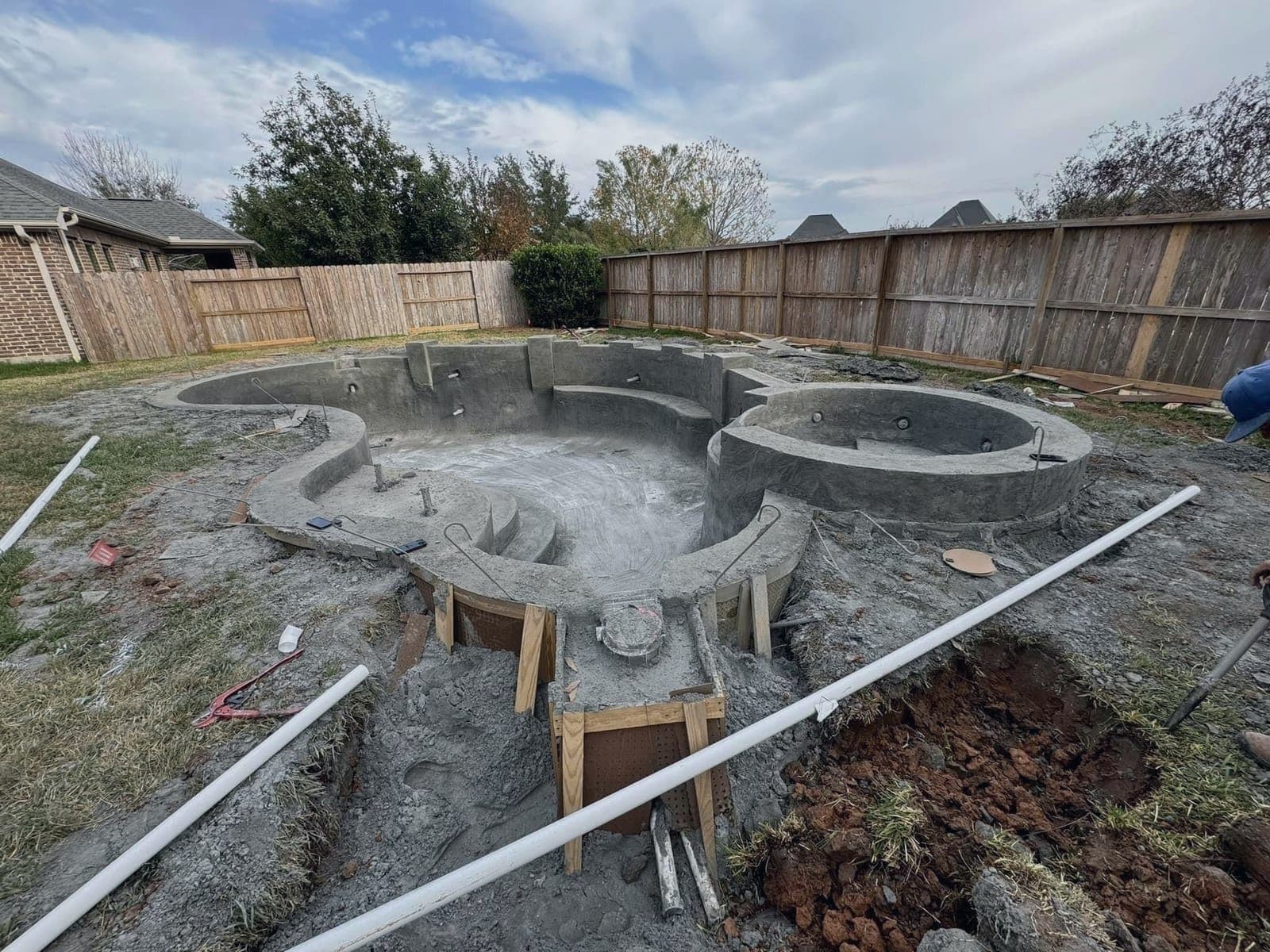
This part of the Gulf Coast sits on expansive clay. It takes on water and swells through a wet spring, then gives that water up and shrinks through a Texas drought, and it does that year after year. Anything built in it gets pushed on from every direction. That is exactly the case a sprayed, steel-reinforced gunite shell is built for: it is one continuous piece of structural concrete rather than a panel assembly or a shell dropped into a hole, so it moves as a single unit instead of working at its seams. Steel placement and shell thickness are what carry that load, which is why they come off the engineer's plan and not off a rule of thumb.
Sandier soils and better drainage
North of Houston the ground changes. The pine belt around Conroe and The Woodlands runs sandier than the clay that dominates the metro, and it generally drains better, so there is less of the seasonal swelling and shrinking that drives soil movement further south. That is easier ground to build in, but it is not a reason to build lighter: sandy soil offers less lateral support against a shell wall than stiff clay does, and excavation walls in sand need more care to hold their shape while the steel goes in. The shell still comes off the engineer's plan.
Coastal ground and a high water table
Close to the bay and the island, the water table sits high and sometimes very high. That changes the job. Groundwater can push into an open excavation while the crew is working, so dewatering becomes part of the build rather than an afterthought, and a finished pool needs a working hydrostatic relief valve so pressure underneath it has somewhere to go. That valve is what stops an empty pool from lifting out of wet ground, which is the single most expensive thing that can go wrong down here. Sandy fill and storm surge exposure are the other two things that separate a coastal build from an inland one.
Flat ground and very heavy rainfall
Southeast Texas takes some of the heaviest rainfall in the country, and the land out here is flat enough that the water has nowhere quick to go. Ground stays saturated longer after a storm than it does inland, which affects when a hole can be dug, when a rig can get to it, and how much water is standing in the excavation when the crew arrives. The clay underneath behaves like the rest of the upper Gulf Coast: it swells wet and shrinks dry. Between the two, drainage around the finished pool matters more here than almost anywhere else in our range.
Service Area
Across Houston & the Gulf Coast
Family-owned and working across greater Houston and the upper Texas Gulf Coast, from Katy and The Woodlands east all the way to Beaumont, and south to Galveston.
16 communities served
- Houston
- Katy
- Fulshear
- Sugar Land
- Pearland
- The Woodlands
- Cypress
- Spring
- League City
- Friendswood
- Galveston
- Conroe
- Richmond
- Baytown
- Winnie
- Beaumont
Not sure if you're in range? Just ask →
Get In Touch
Don't see your town?
We work throughout the Houston to Beaumont corridor and the Texas Gulf Coast. Just ask.