Gunite Guide
Gunite vs. Shotcrete: Which Is Better for a Texas Pool?
Updated October 14, 2026 · 8 min read
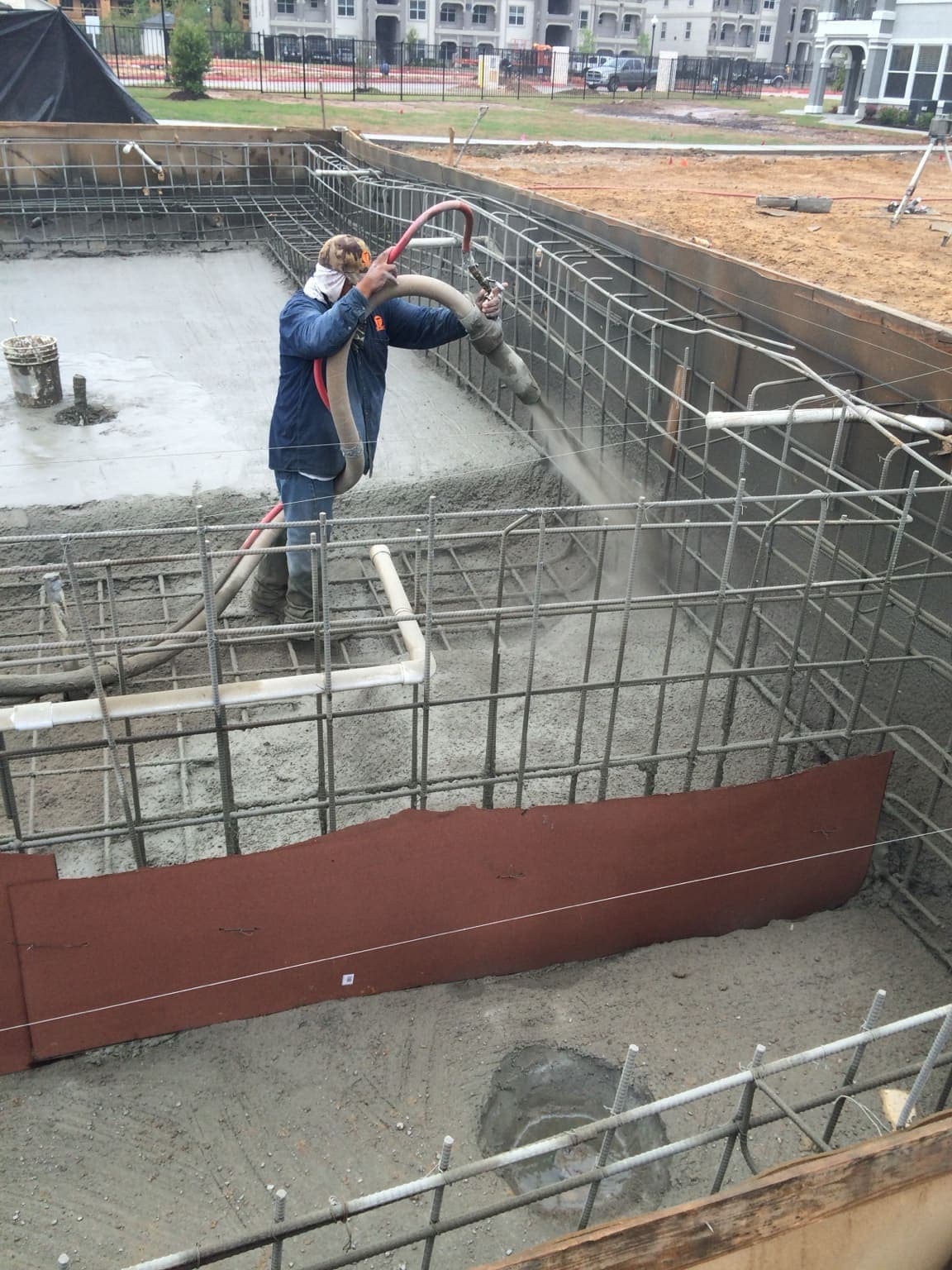
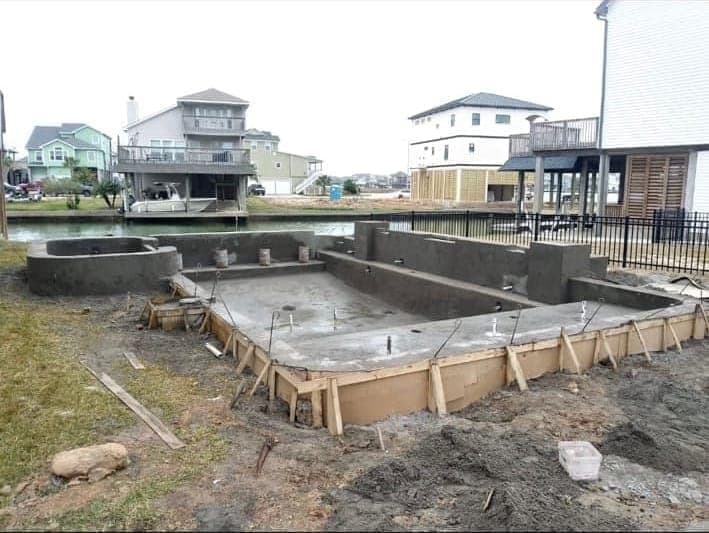
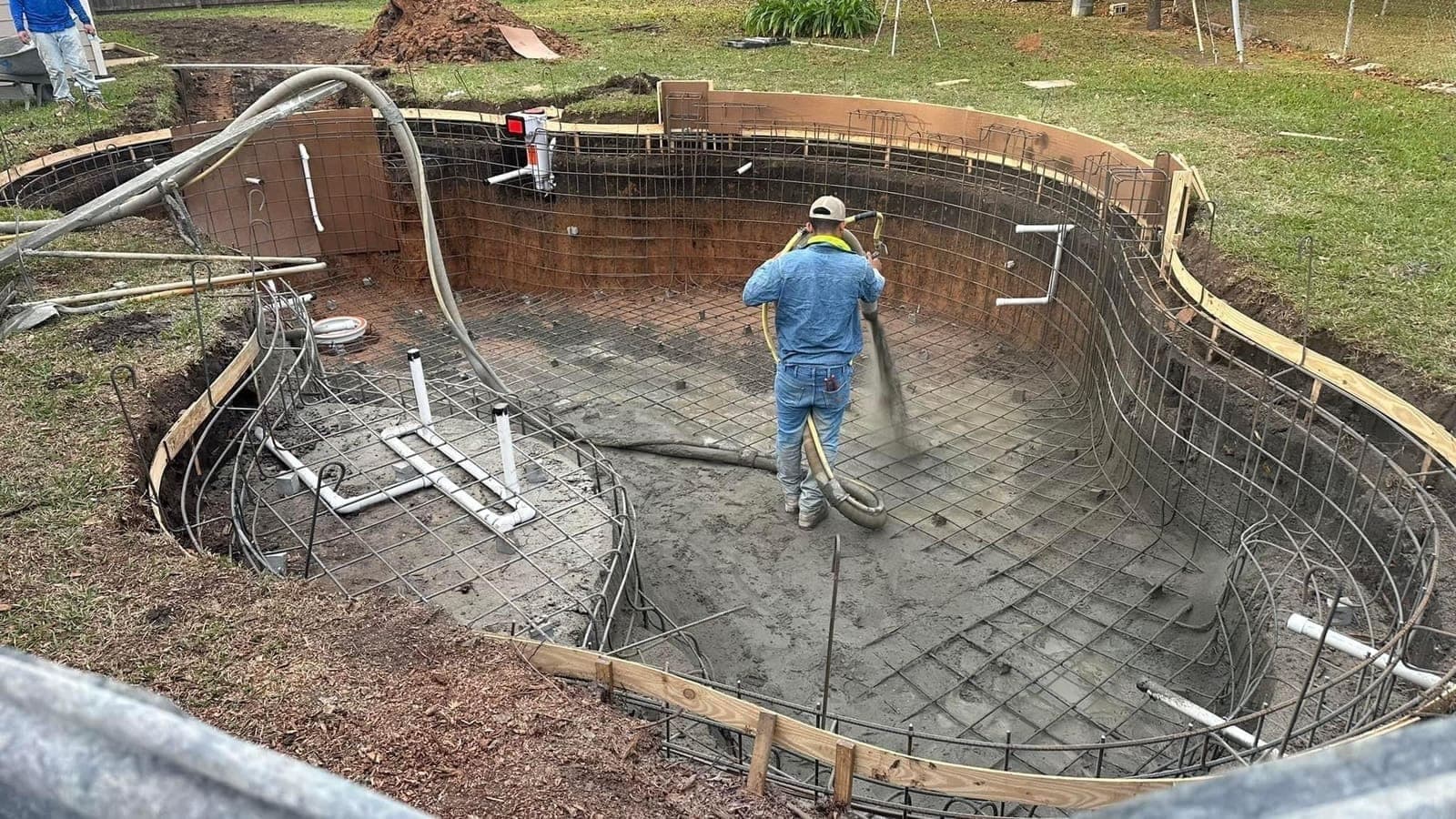
Ask three pool people what separates gunite from shotcrete and you will get three answers. Both are concrete sprayed through a hose at high pressure to form a shell over steel. The American Concrete Institute treats "shotcrete" as the umbrella term for any sprayed concrete, and the pool trade uses the two words to name the two ways of doing it. The real difference is when the water gets added.
Gunite is the dry mix
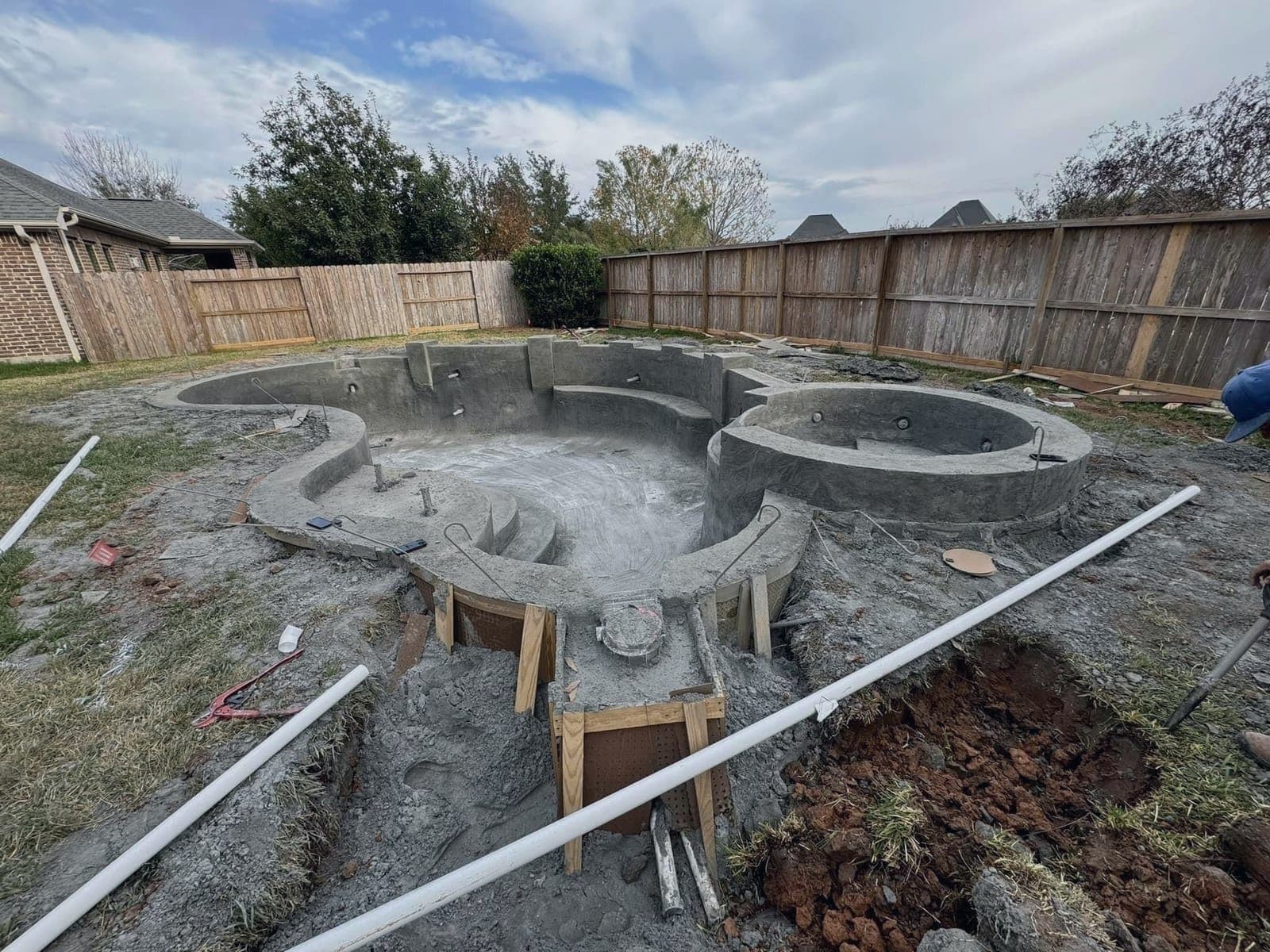
With gunite, a dry blend of cement and sand travels through the hose, and the nozzleman adds water at the nozzle as it sprays. The mix is not wet until the moment it hits the steel. That puts the water in the hands of the person shaping the shell, which is why dry mix suits the sculpted parts of a residential pool: raised spas, benches, tanning ledges, steps, and the bond beam all get carved as the shell goes up.
Shotcrete is the wet mix
With shotcrete, the concrete is batched with water at a plant, delivered by ready-mix truck, and pumped to the nozzle already wet. The mix is consistent from the first yard to the last, placement is fast, and there is less material bouncing off the wall. That makes wet mix a strong fit for big volumes and long flat surfaces: commercial pools, retaining walls, channels, and other structural work.
Side by side
| Gunite (dry mix) | Shotcrete (wet mix) | |
|---|---|---|
| Where water is added | At the nozzle, by the nozzleman | At the batch plant, before delivery |
| The clock | Dry material does not start setting until it is sprayed | Starts at the plant; the load has to be placed before it begins to set |
| Rebound (material that bounces off) | More, and it has to be cleaned out | Less |
| Starting and stopping | Easy to pause the rig | A waiting truck is concrete getting older |
| Best fit | Custom residential shapes and hand-carved features | High-volume commercial and structural work |
What a Texas summer changes
Wet concrete runs on a clock. The industry standard for ready-mix (ASTM C94) expects a load to be discharged within about 90 minutes of batching, and heat shortens the working window further. In a Houston August, a truck stuck in traffic on the way to a backyard is a real problem, and crews manage it with tight scheduling and set-retarding admixtures. Dry-mix gunite sidesteps that clock, because nothing is wet until it leaves the nozzle.
Heat cuts the other way too. Sun and wind pull moisture out of a fresh shell fast, whichever method placed it, and concrete gains strength by curing, not by drying. A gunite shell and a shotcrete shell both need to be kept wet in the days after the shoot, and skipping the water cure weakens either one.
What clay soil does not change
Most of the Houston area sits on expansive clay that swells when it is wet and shrinks when it dries, and near the coast the water table sits high. That soil puts real stress on a pool, but it does not care whether the concrete arrived dry or wet. What it cares about is the steel schedule, the shell thickness, and whatever the engineer specifies for the ground, such as piers or a thickened beam. On bad ground, the plan matters more than the mix. Our guide to how Houston pools handle clay, freezes, and storms goes deeper on that.
Which one is stronger?
Neither, automatically. Both methods can meet the compressive strength an engineer calls for when the mix, placement, and curing are right. The ways they go wrong are different, though. Dry mix depends on the nozzleman's water control and on clearing rebound out of the floor and corners, because rebound worked back into the shell leaves weak spots. Wet mix depends on getting each load placed while it is fresh. Both fail the same way when a pause lets one layer harden before the next goes on, leaving a cold joint that can become a leak.
So which should you pick?
For a custom residential pool, the nozzle control of dry-mix gunite is hard to beat, and it handles a Texas summer without a truck clock. For a commercial pool, a long retaining wall, or other high-volume structural work, wet-mix shotcrete often makes more sense. In both cases the crew matters more than the label, so ask a contractor how they handle rebound, how they avoid cold joints, and who keeps the shell wet after the shoot.
- Gunite (dry mix): water added at the nozzle, maximum control, no truck clock, ideal for custom residential shapes
- Shotcrete (wet mix): batched wet, fast and consistent placement, strong fit for large or commercial work
- Either method is only as good as the steel, the placement, and the curing behind it
What South Coast Gunite uses
We shoot both, matched to the job. After more than 20 years on the Texas Gulf Coast, the method is rarely the hard question. Getting the shell right is: correct steel, a continuous shoot with no cold joints, rebound cleared out, and proper curing every time.
Frequently asked questions
Is gunite or shotcrete better for a pool in Texas?
For most custom residential pools, dry-mix gunite gives the crew more control over hand-shaped features and avoids the time limit that wet ready-mix concrete runs on in summer heat. For large commercial or structural work, wet-mix shotcrete is often the better fit. The quality of the crew and the curing matters more than the method.
Is gunite the same as concrete?
Gunite is concrete, applied a specific way. It is a dry blend of cement and sand sprayed through a hose, with water added at the nozzle. The result is a high-strength concrete shell.
Is gunite or shotcrete stronger?
Neither is automatically stronger. Both can reach the strength an engineer specifies when they are mixed, placed, and cured correctly. Workmanship and curing matter far more than which method is used.
Does Houston clay soil change which method I should use?
No. Expansive clay and a high water table put stress on any pool, but the answer to bad ground is the engineering: the steel schedule, the shell thickness, and things like piers or a thickened beam. The soil does not care whether the concrete arrived dry or wet.
What is rebound in gunite?
Rebound is material that bounces off the wall during spraying. Dry-mix gunite produces more of it than wet mix. A good crew clears it out of the floor and corners as they go, because rebound worked back into the shell leaves weak spots.
Planning a gunite pool on the Gulf Coast?
We have shot shells across Houston to Beaumont for over 20 years. Get a free, no-pressure estimate.